Best Digital Signage for Restaurants
Find the best digital signage for restaurants with less hardware, faster updates, easy menu control, and centralized management across locations.
On this page
Lunch rush starts in 20 minutes, a menu item just sold out, and your promo board still shows yesterday’s special. That gap is where the best digital signage for restaurants proves its value. Not as a flashy add-on, but as an operational tool that keeps menus accurate, promotions timely, and every screen under control.
Restaurant teams do not need another system that takes weeks to set up or depends on IT every time pricing changes. They need screens that are easy to update, simple to manage across one or many locations, and affordable enough to scale. That is the real standard for choosing digital signage in a restaurant environment.
What the best digital signage for restaurants actually does
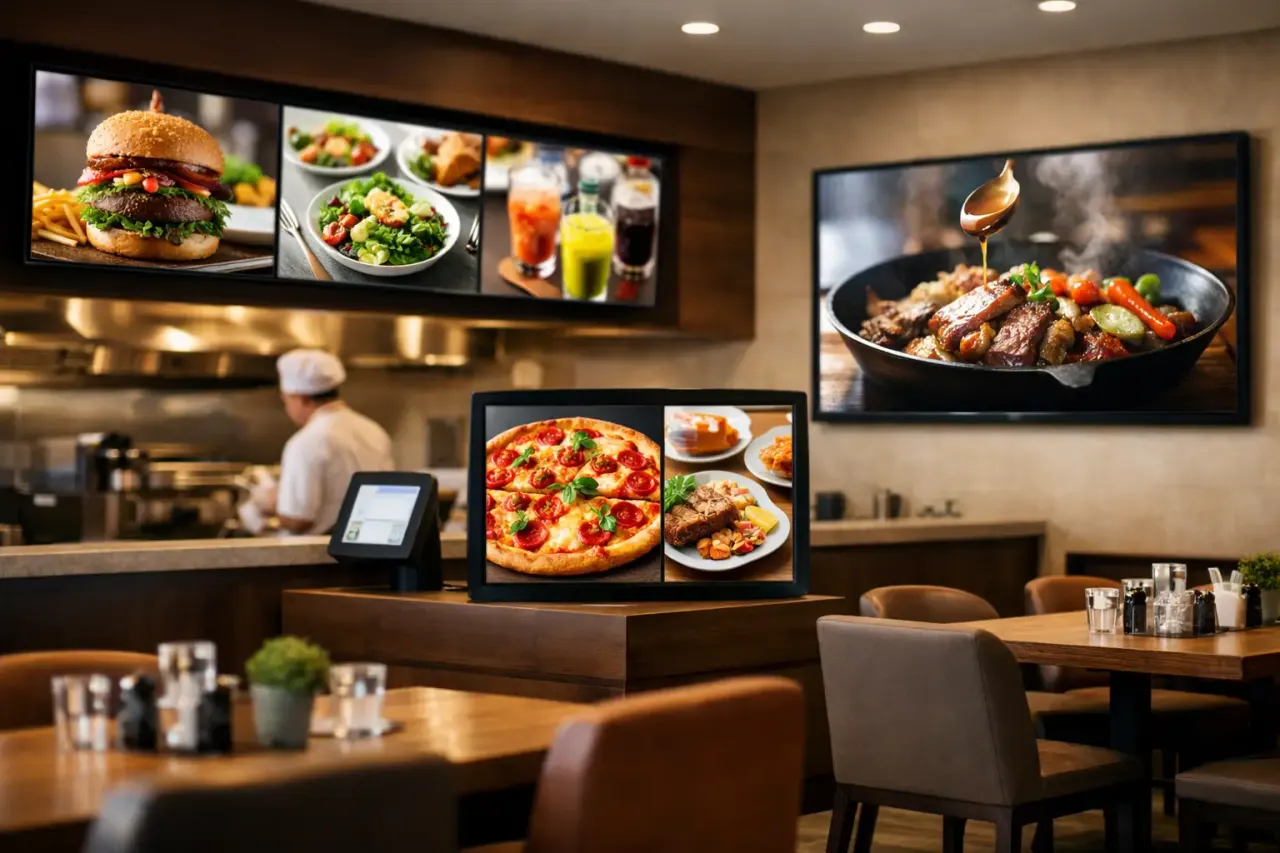
A restaurant screen has a harder job than a screen in most other businesses. It has to sell, inform, and adapt fast. One display may be showing a breakfast menu until 10:59, lunch at 11:00, and a limited-time combo at 11:01. Another may be in the lobby promoting catering. A third might sit behind the bar rotating happy hour pricing and event announcements.
The best digital signage for restaurants handles those shifts without creating more work for managers. It lets teams change content from one dashboard, schedule different playlists by time of day, and push urgent updates immediately when something changes on the floor.
That sounds basic, but many setups still rely on USB sticks, manual TV updates, or media players that add cost and failure points. Those systems can work in a single store with low update frequency. They break down fast when timing matters or when multiple locations need the same message at once.
The wrong buying criteria cost restaurants money
A lot of restaurant operators start by comparing screen quality or focusing on template design first. Those matter, but they are not the biggest factors. The bigger question is how much effort the system adds after installation.
If a platform requires separate media players, complicated wiring, or constant on-site troubleshooting, the low monthly price stops looking cheap pretty quickly. The same goes for systems that make simple menu edits feel like production work. Restaurants do not have time for design bottlenecks when prices, availability, and promotions change every week.
Good restaurant signage should reduce labor, not shift it around.
What to look for in restaurant digital signage
No extra hardware if you can avoid it
This is one of the clearest separators between older signage models and modern platforms. Traditional systems often require a dedicated media player for every screen. That adds hardware cost, setup time, cable clutter, and one more device to fail.
For many restaurants, the better option is software that runs on Smart TVs or inexpensive streaming devices already connected to the display. That lowers the upfront investment and makes expansion much easier. Opening a new location should not mean rebuilding your signage stack from scratch.
Fast menu and promo updates
Restaurant content has a short shelf life. If your team cannot change prices, swap images, remove unavailable items, or launch a new promo in minutes, the system is too slow.
Look for drag-and-drop editing, reusable templates, and real-time publishing. Those features are not just convenient. They protect consistency and reduce the chance that one store is showing outdated information while another is current.
Scheduling that matches restaurant operations
Dayparting is not optional in food service. Breakfast, lunch, dinner, late-night, weekend brunch, seasonal offers, and location-specific specials all need different timing.
The right platform should let you schedule content by hour, day, date range, or recurring promotion. It should also make those schedules easy to understand at a glance. If your managers need a training session just to update a lunch playlist, that is a bad fit.
Centralized control for multi-location teams
Single-store restaurants can sometimes get by with manual processes. Franchise groups and multi-unit operators cannot. Once you are managing five, ten, or fifty locations, centralized control becomes the feature that matters most.
You want one dashboard for publishing systemwide updates, while still allowing local flexibility when needed. Corporate teams should be able to lock brand standards. Store-level teams should be able to swap approved promos or update local details without breaking the overall experience.
Proof that screens are actually playing
A digital sign only works when it is online and showing the right content. That sounds obvious, yet many restaurants have no visibility once a screen is mounted.
Uptime monitoring and play history matter because they answer two simple questions: is the screen live, and did the message run? Without that, operators are guessing. With it, they can catch outages fast and verify campaign execution across locations.
Best digital signage for restaurants by use case
There is no single best choice for every restaurant. The right fit depends on how many screens you manage, how often content changes, and how much operational overhead you can tolerate.
Best for single-location restaurants
If you run one location, simplicity usually beats feature depth. You need menu boards, promo screens, and maybe one waiting-area display. The best system here is easy to set up, does not require dedicated hardware, and lets a manager update content without calling a vendor.
In this case, a lightweight cloud-based platform is usually a better investment than a custom-installed solution. You get faster deployment and lower costs, which matters more than enterprise features you may never use.
Best for growing restaurant groups
If you have several locations and expect more, scalability should drive the decision. The platform needs centralized control, location-level scheduling, and enough structure to keep branding consistent while still supporting store-specific content.
This is where cheap consumer-grade workarounds start to hurt. They may be manageable at two stores, but they get messy at ten. Growth exposes every weak point in your setup.
Best for franchise and enterprise teams
Large restaurant organizations need more than screen publishing. They need permission controls, standardized templates, analytics, and support for broad rollouts. They also need a setup that local teams can use without creating support tickets all day.
For this group, the best option is usually a platform that combines enterprise control with easy deployment. Complexity at headquarters is fine if it creates simplicity in the field. Complexity at the store level is where systems fail.
Common mistakes restaurants make when choosing signage
One of the biggest mistakes is overbuying hardware and underestimating software. Screens are visible, so buyers focus on displays first. But the software determines whether your team can actually manage those displays efficiently.
Another mistake is choosing a system that looks impressive in a demo but slows down basic tasks. Restaurant signage lives or dies on repeatable daily use. If updating a combo meal takes too many steps, staff will avoid the system and screens will go stale.
The third mistake is ignoring offline playback. Internet interruptions happen. If your displays go black every time connectivity dips, that is a customer-facing problem. A better platform keeps scheduled content playing even when the connection is temporarily unstable.
Why software-first signage is winning in restaurants
Restaurants are moving away from IT-heavy signage setups for the same reason they moved away from manual menu changes where possible - speed matters, and operational drag adds up.
A software-first approach reduces the need for extra boxes, simplifies deployment, and gives teams more direct control over what appears on screen. It also shortens the path from decision to launch. Instead of planning a hardware project, many operators can go live using TVs they already own.
That shift is a big reason platforms like VitVue are gaining traction. The value is straightforward: no dedicated media players, fast rollout, centralized screen control, and updates that can happen in real time without turning signage into an IT project.
How to choose the right platform for your restaurant
Start with your operating model, not the feature list. Ask how many screens you have, how often content changes, who will manage updates, and whether those updates need to happen across multiple locations at once.
Then look at total cost, not just subscription cost. Include hardware, installation, maintenance, staff time, and how much friction the system adds to everyday tasks. A platform with a slightly higher monthly fee can still be the better deal if it removes media player costs and cuts update time dramatically.
Finally, pressure-test the workflow. Can a manager change a lunch special in a few minutes? Can corporate publish a promotion to every location at once? Can the system keep playing if internet service drops? If the answer to those questions is yes, you are looking at a platform built for restaurant reality, not just for a sales presentation.
The best restaurant signage is not the one with the longest feature list. It is the one your team will actually use, your locations can actually scale, and your customers can trust every time they look up at the screen.
Explore VitVue digital menu board software.