12 Gym Digital Signage Ideas That Work
12 gym digital signage ideas to boost member engagement, promote classes, cut manual updates, and manage screens faster across locations.
On this page
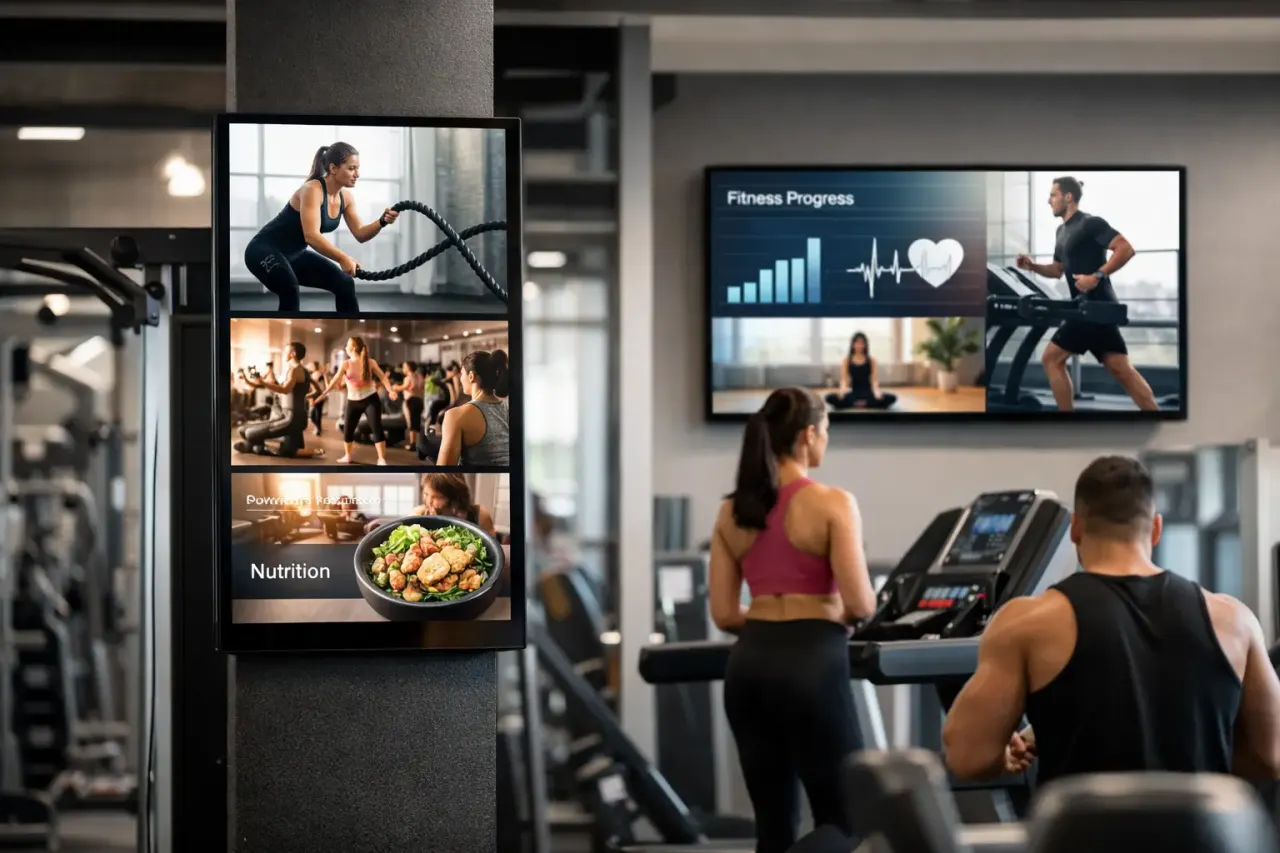
A wall-mounted TV in a gym should do more than play cable news with the volume off. If you are investing in screens, they should help members move, buy, book, and come back. The best gym digital signage ideas are not just decorative - they reduce front-desk friction, promote higher-value services, and keep communication consistent across every screen.
For gym owners and multi-location operators, that matters. Printed posters get stale fast. USB updates get missed. One location runs a class promo while another still shows last month’s challenge. Digital signage fixes that, but only if the content is built around actual gym operations.
What good gym digital signage ideas need to do
A fitness facility has a different content rhythm than retail or hospitality. Your screens need to support recurring schedules, short-term promotions, daily energy, and real-time updates without creating more work for staff. That means the best content is clear, repeatable, and easy to swap out.
There is also a practical constraint most operators run into quickly - too much motion, too much text, or too many competing messages makes screens easy to ignore. Members are usually walking in, checking a class time, resting between sets, or heading to the locker room. They are not standing still to read a paragraph. Good signage respects that.
12 gym digital signage ideas that earn their screen space
1. Class schedules that stay current
This is the most obvious use case, and still one of the most valuable. A digital class board near the entrance, front desk, or studio saves staff time and reduces schedule confusion. It also gives you an easy place to highlight new formats, instructor changes, or limited-capacity classes.
The difference is in how often it updates. If your schedule changes frequently, static slides become a liability. A centrally managed screen setup makes it easier to keep every location accurate without asking local teams to manually reload content.
2. Personal training and premium service promos
Many gyms leave money on the table by promoting training packages only at the front desk. Screens let you put those offers where attention already exists - by weight areas, cardio zones, and recovery spaces.
Keep these promos simple. One offer, one outcome, one clear call to action. “Book a fitness assessment” will usually outperform a crowded slide listing every package and price.
3. Member onboarding tips
New members often feel lost in the first two weeks. That is when churn risk is highest. Digital screens can guide them through the basics without forcing staff to repeat the same orientation points all day.
Use short rotating content such as how to book classes, where to find stretching areas, how to access locker rooms, or what to expect in a first training session. It is a small operational move that improves the first-visit experience.
4. Workout-of-the-day screens
This works especially well in functional fitness spaces, boutique studios, and training zones where members want direction. A workout-of-the-day display gives structure, creates energy, and can make independent members more likely to stay longer.
It does depend on your audience. In a premium health club, you may want a more polished “featured training focus” format. In a high-intensity gym, bold daily programming can become part of the brand experience.
5. Challenges, leaderboards, and community wins
If you run attendance challenges, transformation programs, referral contests, or club milestones, screens are the fastest way to keep momentum visible. This kind of content works because it gives members social proof that people are participating right now.
There is a trade-off here. Public leaderboards can motivate some members and alienate others. For general fitness clubs, it is often smarter to highlight opt-in wins, team totals, or milestone counts rather than overly personal performance stats.
6. Retail and grab-and-go promotions
Gyms with smoothie bars, supplements, apparel, or branded merchandise should not rely on countertop signs alone. A screen near check-in or the café area can push higher-margin add-ons far more consistently.
The key is timing. Breakfast offers in the morning, recovery products in the evening, apparel during member events. Scheduling content by daypart makes these promos more relevant and prevents screens from feeling repetitive.
7. Real-time announcements
Studios closed for cleaning. A trainer out sick. Holiday hours. A room reservation. These are exactly the kinds of updates that break old signage workflows. Printing is slow, and group texts are unreliable.
This is where digital signage becomes operational, not just promotional. If you can push updates instantly across one screen or many, staff spends less time explaining changes and members get the message before they ask.
8. Technique and safety reminders
Not every screen needs to sell. Some should reduce risk and improve floor behavior. Quick reminders about reracking weights, wiping equipment, proper shoe policy, or safe machine use can support a cleaner and more consistent gym floor.
This content works best when it feels helpful rather than scolding. Short visuals and concise language are enough. Members tune out lectures.
9. Instructor and trainer spotlights
People stay loyal to people. Featuring coaches, trainers, and instructors on-screen helps newer members connect with your team and makes premium services more approachable.
This is especially useful across multiple locations where staffing differs by site. You can localize trainer profiles while keeping the overall design and messaging consistent from a central dashboard.
10. Social proof and testimonials
Member success stories, review highlights, and before-and-after style transformation content can be persuasive, especially near tours and sales conversations. Screens can reinforce the value of joining without requiring a salesperson to carry the whole pitch.
Be selective. The best testimonials are specific and believable. “Lost 20 pounds and now I actually enjoy coming in at 6 a.m.” is stronger than a vague five-star quote.
11. Localized content for each zone
A cardio area does not need the same message as a group fitness hallway. Zone-based content is one of the simplest ways to make signage feel relevant. Cardio screens can show endurance challenges or training tips, while locker room screens can promote recovery services or member app reminders.
This is where many gyms either overcomplicate the system or keep everything generic. The better approach is controlled variation - a shared brand template with local playlists by screen, zone, or location.
12. Brand moments that do not feel like filler
Your screens can reinforce your gym’s identity, but brand slides should still earn attention. Instead of generic slogans, use content that reflects real culture: event recaps, charity partnerships, community classes, member milestones, or seasonal campaigns.
If a screen only says “Welcome to our gym” for 15 seconds every rotation, that space is underperforming. Brand content should support retention, trust, or participation.
How to choose the right gym digital signage ideas
Not every gym needs all 12. A single-location studio may get the most value from schedules, onboarding, trainer spotlights, and retail promos. A larger health club may need zoned content, multi-screen playlists, and live operational updates. A franchise group needs something else again - consistency without losing location-level flexibility.
A simple way to prioritize is to ask three questions. What do members ask staff every day? What do you want members to buy or book more often? What changes often enough that printed signage keeps failing? Your first screen strategy should solve those three problems before it tries to do everything.
Execution matters more than the idea
The idea itself is only half the job. If content is hard to update, screens go stale. If every change requires a USB stick, local login, or separate media player, the system creates friction fast. That is usually why gym signage gets neglected after the initial rollout.
A better setup keeps deployment simple. Use the TVs you already own or connect low-cost streaming devices, manage content centrally, schedule by location or zone, and push updates live when something changes. No heavy install. No dedicated IT team. No guessing whether screens are online.
That operational control is what turns signage from a one-time project into a working channel. Platforms like VitVue are built for exactly that gap - faster rollout, lower hardware overhead, and one place to create, schedule, and monitor screens across a gym network.
What to avoid on gym screens
The biggest mistake is trying to say too much. Long paragraphs, overloaded slides, and constant motion make content harder to absorb. The second mistake is letting every department add messaging without a clear priority. Members end up seeing five calls to action in 20 seconds and acting on none of them.
There is also a design trap: treating every screen like a billboard. In reality, some screens are for quick decisions, some are for atmosphere, and some are for immediate operational updates. The content should match the moment.
A gym screen should help someone do the next thing faster - check a class time, book training, grab a drink, join a challenge, or understand a change. If it does that consistently, it is working. If it is just filling space, it is probably costing more attention than it earns.
The smartest gym digital signage ideas are not the flashiest ones. They are the ones your staff can manage easily, your members actually notice, and your business can scale without adding complexity.
Browse ready-made digital signage apps like weather, menus, clocks and news tickers.